
Garlic Companion Plants: What to Plant With Garlic in New Zealand
Updated November 2026
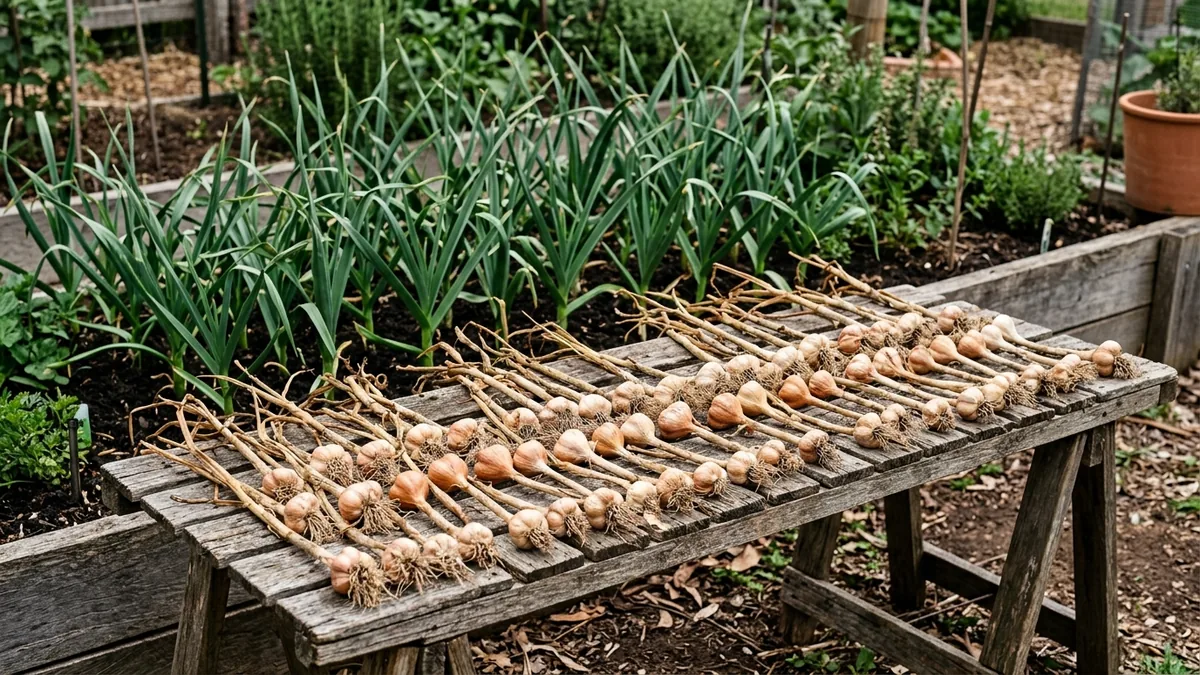
Our data gives garlic these companions: beetroot, lettuce, strawberry, tomato and fruit trees. Reading the lists both ways widens the fruit group to peach, apple, pear, plum, apricot, nectarine, cherry, raspberry, boysenberry and nashi, and adds roses. Beans and peas are the plants to keep apart, along with asparagus.
Garlic sits in the ground for about seven months, from winter through to the longest day, so its neighbours have to suit a cool, slow season. Each pairing here is labelled Proven, Promising or Tradition, and most of the garlic folklore turns out to be tradition.
Each pairing is labelled Proven (someone measured it and it held), Promising (the results are real but mixed, or they come from another crop) or Tradition (we searched for a trial and found none). A tradition is not a mistake, and where one is cheap and harmless we say so.
Plant with garlic
| Plant | Evidence | Why, and what we found |
|---|---|---|
| Strawberry | Promising | A Brazilian field trial found that garlic planted among strawberries cut two-spotted mite numbers without reducing strawberry yields, and a UK trial reported fewer strawberry aphids beside garlic. Both are small trials overseas, so we rate it Promising. |
| Beetroot | Tradition | Beetroot is shallow rooted and grows in the same cool months as garlic, so they share a bed without much competition. We found no trial of a benefit to either crop. |
| Lettuce | Tradition | A quick, shallow crop for the gaps while garlic is small, picked before the bulbs need room. Garlic's smell is said to deter pests, and we found no trial. |
| Tomato | Tradition | Garlic comes out around the time tomatoes go in, so one can follow the other in the same bed. The smell is said to discourage spider mites, and we found no trial on tomatoes. |
| Fruit trees | Tradition | A ring of garlic beneath apple, plum, peach and other fruit trees is an old habit, often linked to peach leaf curl. We found no trial showing that garlic prevents it. Keeping winter rain off the tree and using a registered product to the label are the measures that work. Garlic is a harmless filler under a tree. |
| Raspberry, boysenberry and roses | Tradition | Garlic is traditionally planted at the base of cane fruit and roses to deter aphids and other pests. We found no trial supporting that, and it does no harm there. |
Keep apart from garlic
| Plant | Evidence | Why, and what we found |
|---|---|---|
| Beans (all types) | Tradition | Our data lists beans as poor neighbours for garlic, including bush, runner and broad beans. We found no field trial. Garlic is out of the ground by midsummer, so a bean crop that follows it is a better plan than one planted beside it. |
| Peas and snow peas | Tradition | Our data lists peas as poor neighbours. We found no trial. Peas and garlic share the cool months, so separate rows are the easy precaution. |
| Asparagus | Tradition | Asparagus is a permanent bed that should not be disturbed, and garlic is dug each year. We found no trial of a clash, so this is a practical separation. |
| Onions, leeks and shallots in the next season | Proven | Garlic and onions are in the same family and share white rot, a soil fungus whose resting spores can survive in the ground for 20 years or more (UC IPM). It cannot be cured. Never follow garlic with another allium in the same bed, and start with clean seed garlic. |
A simple bed layout
A bed 1.2 m wide and 2.4 m long holds about five rows of garlic at the data spacing of 15 cm, which is around 80 cloves, so many gardeners give garlic half a bed. The sun is to the north in New Zealand, so put tall plants on the southern edge.
| Position | What goes there | Why |
|---|---|---|
| Middle of the bed | Cloves 15 cm apart in rows 25 to 30 cm apart | The long winter crop that holds the bed until summer. |
| Gaps in the early weeks | Lettuce and a few beetroot | Quick crops, picked before the garlic needs the space. |
| Edge of the bed | A row of strawberry runners | The one pairing that has a trial behind it. |
| After the garlic is lifted | Tomatoes, or beans if you want a legume | Summer crops that can follow garlic in the same soil. |
| A different bed | Peas, asparagus and next year's onions | Keeps legumes apart and avoids a second allium crop on the spot. |
What companions will not do
No neighbour alters the main garlic risk, which lives in the soil. White rot arrives in infected soil or cloves, not from the plants beside it, so use certified seed garlic, plant into free-draining soil and give every allium bed a long break. Rust is managed with spacing, airflow and watering at the base of the plants.
Planting months differ by region, so check the garlic plant page before you buy cloves. Our guide to how to plant and grow garlic covers depth, spacing and varieties.
Related pages
- Garlic plant page with regional planting months
- How to plant and grow garlic
- When to harvest garlic
- Garlic in containers
- Companion planting chart
- White rot
- Bed planner with companion checks
Questions
What is the best companion plant for garlic?
Strawberry has the only evidence, since trials found fewer spider mites and aphids beside garlic. Beetroot and lettuce are easy neighbours in the cool months, though we found no trial showing a benefit.
What should not be planted near garlic?
Our data lists beans and peas, and asparagus appears when the lists are read both ways. We found no field trial for the legumes. The firm rule is to avoid another allium on the same soil the next season, because of white rot.
Can I plant garlic with tomatoes?
Yes, our data lists them as companions, and in practice garlic comes out as the tomatoes go in. We found no trial that shows either crop benefits the other.
Does garlic protect fruit trees?
Planting garlic around fruit trees is a long tradition, and we found no trial showing it prevents peach leaf curl or other tree diseases. It does no harm, but disease control needs winter rain cover or a registered product used to the label.
How far apart should garlic be planted?
Our plant data gives 15 cm between cloves. Companions go at the bed edges and in the gaps between rows, kept clear of the garlic leaves.