
Fig Varieties for New Zealand: Which Fig to Plant by Region
Updated November 2026
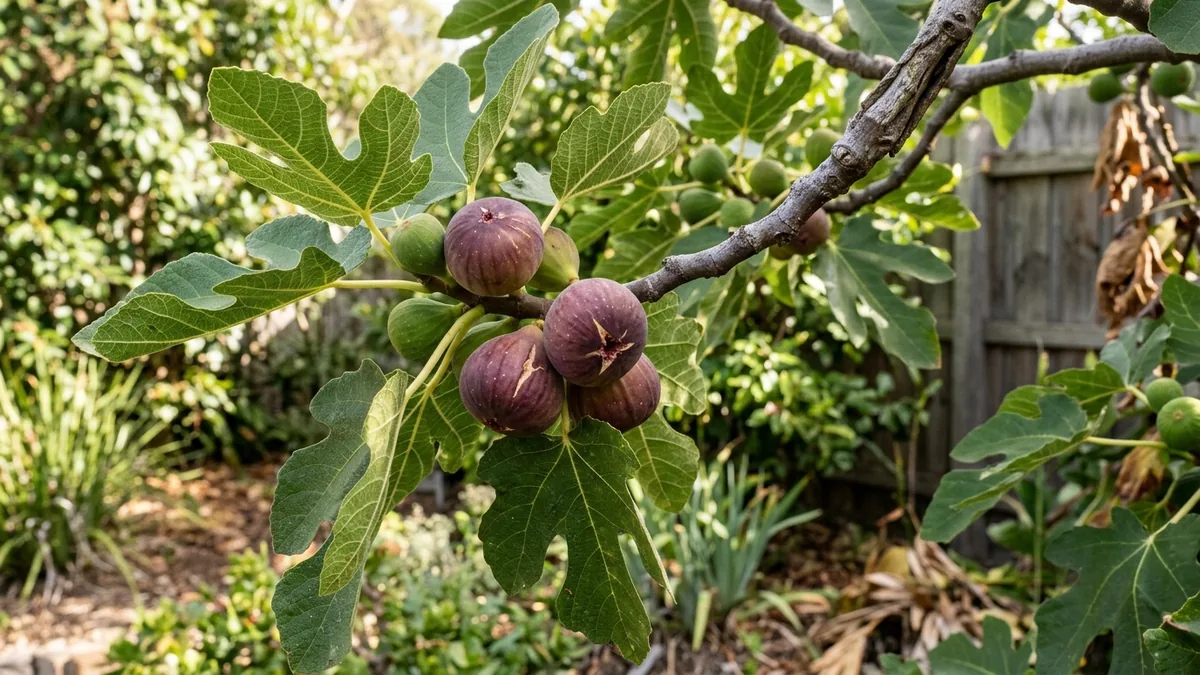
A variety table for Brown Turkey, Mrs Williams, Brunswick and more, matched to our regions.
The best fig varieties for New Zealand gardens are Brown Turkey for the cooler south, Mrs Williams for a heavy crop in warm districts and Brunswick for a large fig that tolerates cold. Black Genoa and White Adriatic are named in our fig guide for warm sunny gardens. This page compares the varieties New Zealand nurseries sell, with their crops, climate fit and suitability for pots.
Short answer: in Northland, Auckland and the Bay of Plenty, almost any fig will do, and Mrs Williams and Black Genoa are popular. From Wellington south, choose Brown Turkey or Brunswick and give the tree the warmest, most sheltered wall you have. Plant bare-root trees in winter.
Fig varieties compared
The table below uses the New Zealand seller pages named at the end and our fig growing guide. Where a seller does not state a detail, the table says so. Stock changes with the season, so several of the less common varieties were out of stock when the listings were checked.
| Variety | Skin and flesh | Crops | Fruit size | Climate fit | Pots | Notes |
|---|---|---|---|---|---|---|
| Brown Turkey | Brown skin, pink flesh | Breba and main in warm districts | Medium to large | Suits all regions and is the most cold hardy (The Plant Company) | Good | The safest pick for the south. Wairere describes it as a favourite for jam and preserving. |
| Brunswick | Green to purple skin, flesh described as amber | Main crop, late summer to early autumn | Large | Cold tolerant, suits all regions (The Plant Company) | Good, with a large pot | A large fig for cooler gardens with a sunny wall. |
| Mrs Williams | Purple brown skin, amber red flesh (The Plant Company) | Two crops, about January and April (Wairere) | Large | Warm temperate | Good | A well known New Zealand garden fig that is sold under the name Mrs Williams or as Fig Edible. |
| Black Genoa | Dark purple skin, deep red flesh | Breba and main in warm districts | Large | Warm north and warm sheltered spots | Good | Named in our fig growing guide. It was not listed by the New Zealand sellers checked for this page, so ask your nursery before you plan around it. |
| White Adriatic | Green skin, strawberry red flesh | Mainly main crop | Medium to large | Warm, sunny districts | Good | Named in our fig growing guide. Not listed by the sellers checked, so check availability. |
| Vlassoff | Skin not stated, flesh rich and honeyed | Not stated | Medium | Compact tree | Very good, sold for small gardens and large patio containers | Listed by The Plant Company, though out of stock when the page was checked. |
| Panache (Tiger Fig) | Green and yellow striped skin, red flesh | Not stated | Not stated | Sheltered, sunny, well drained site | Good | A striped fig that also suits a sunny deck. |
| Brunoro Black, Black Malta and Black Pouta | Dark skin | Not stated | Not stated | Described as performing well in New Zealand conditions | Good | Dark figs that The Plant Company lists, though out of stock when the page was checked. |
| Herne Bay, Oakura and Windleburn | Not stated by the seller | Consistent, reliable crops | Not stated | Bred or selected in New Zealand conditions | Good | Local selections with a track record, listed by The Plant Company and out of stock when the page was checked. |
What breba and main crop mean
A fig can set two crops in a year. The breba crop forms on last year's wood and ripens in early summer, while the main crop forms on the current season's growth and ripens from late summer into autumn. In Northland and Auckland the breba crop usually ripens, so two crops are common. From Wellington south the breba crop is light or rarely ripens, so the main crop is the one that counts. Our guide has a region table of ripening months, and the fig pruning page explains why heavy winter cuts remove the breba crop.
Brown turkey fig in New Zealand
Brown Turkey is the most widely sold fig in New Zealand and the most forgiving. The Plant Company describes brown skin and pink flesh on a medium to large fruit, suited to all regions. Our guide calls it the most cold hardy fig, which makes it the safest choice in Canterbury, Otago and Southland. Wairere describes it as a favourite for jam and preserving. It copes with pots well, though a large pot is needed for a full crop.
Mrs Williams fig
Mrs Williams is a familiar New Zealand garden fig. The Plant Company describes purple brown skin and amber red flesh, and Wairere says it gives two crops of large fruit a year, around January and April. That makes it a good fit for the warm north and the Bay of Plenty, where the season is long enough for both crops to ripen. It is a good choice if you want one productive tree rather than a collection.
Black Genoa and White Adriatic
Both are well known overseas and named in our fig guide for warm districts. Black Genoa has dark purple skin and deep red flesh, and it is large, rich and sweet. White Adriatic has green skin and strawberry red flesh, and it loves a hot spot. Neither was listed on the New Zealand seller pages checked for this page, so ask a local nursery whether they can source one before you plan a garden around them. Brown Turkey and Mrs Williams are easier to find.
Which fig suits your region
Figs are frost hardy once they are fully dormant, but young trees, potted figs and the autumn crop are frost sensitive. Check the frost dates for your area, then match the variety to your region.
- Northland and Auckland: two crops are common, so Mrs Williams, Black Genoa and Brown Turkey all do well. See Northland and Auckland.
- Waikato, Bay of Plenty and the Central North Island: Brown Turkey, Mrs Williams and Brunswick. See Waikato and Bay of Plenty and Central North Island.
- Wellington, Nelson and Marlborough: Brown Turkey or Brunswick on a warm wall. See Wellington and Nelson.
- Canterbury, Otago and Southland: Brown Turkey on a sheltered sun-facing wall, or a pot you can shelter over winter. See Canterbury and Otago and Southland.
- Central Otago: hot summers ripen figs well, but frosts are hard, so a sheltered wall matters. See Central Otago.
When to plant a fig
Bare-root figs go in while the tree is dormant, and container-grown figs can go in during autumn or spring. These are the planting months from our data.
| Region | Planting months |
|---|---|
| Northland | Jun to Aug |
| Auckland | Jun to Aug |
| Waikato & Bay of Plenty | Jun to Aug |
| Central North Island | Jun to Aug |
| Wellington & Lower North Island | Jun to Aug |
| Nelson & Marlborough | Jun to Aug |
| Canterbury | Jun to Aug |
| Otago & Southland | Jun to Aug |
| Central Otago | Nov |
Growing a fig in a pot
Figs suit containers because root restriction pushes the plant to fruit and keeps it compact. Use a pot at least 50 cm wide and deep with good drainage and a free draining mix, as explained in our potting mix guide. Compact types such as Vlassoff are sold for small gardens and large patio containers. In the south a potted fig can be moved to a sheltered spot over winter, which helps with frost. Repot or root prune every two to three years in winter.
Protecting the fruit
Birds strip ripe figs fast, and netting is the only reliable fix. See the birds page for netting and deterrents. Wasps and other insects also go for split or very ripe fruit, so pick figs as soon as the neck bends, because figs do not ripen further once picked. Even watering near harvest reduces splitting.
Where to buy figs in New Zealand
The Plant Company and Wairere both list figs, including Brown Turkey and Mrs Williams, and The Plant Company lists Brunswick, Panache and several less common varieties. Local garden centres often sell Brown Turkey as a bare-root tree in winter. For other fruit that does well in cool gardens, see low chill fruit and our dwarf fruit trees guide.
Questions
What is the best fig variety for New Zealand?
Brown Turkey is the safest choice for most gardens and the most cold hardy, while Mrs Williams is a heavy cropper in warm districts. Brunswick is a large fig that tolerates cold.
Do fig trees need a pollinator in New Zealand?
No. Common figs such as Brown Turkey are self-fertile and set fruit on a single tree. You do not need a second tree.
Which fig is best in Canterbury, Otago or Southland?
Brown Turkey on a sheltered, sun-facing wall, or in a pot you can shelter over winter. Expect the main autumn crop, because the breba crop rarely ripens that far south.
Which figs suit pots?
Compact types such as Vlassoff are sold for small gardens and large patio containers, and Brown Turkey grows well in a pot at least 50 cm wide and deep.
Is Mrs Williams a good fig?
Yes. Wairere describes it as giving two crops of large fruit a year, around January and April, which suits the warm north and the Bay of Plenty.
When should I plant a fig tree in New Zealand?
Plant bare-root figs in winter while they are dormant. Container-grown figs can go in during autumn or spring. The table on this page gives the planting months for each region.
Sources
Plant profile
The fig profile has sowing times for your region, companion plants and common pests.