
How to Prune Stone Fruit Trees in NZ: Peaches, Plums, Apricots and Cherries
Updated November 2026
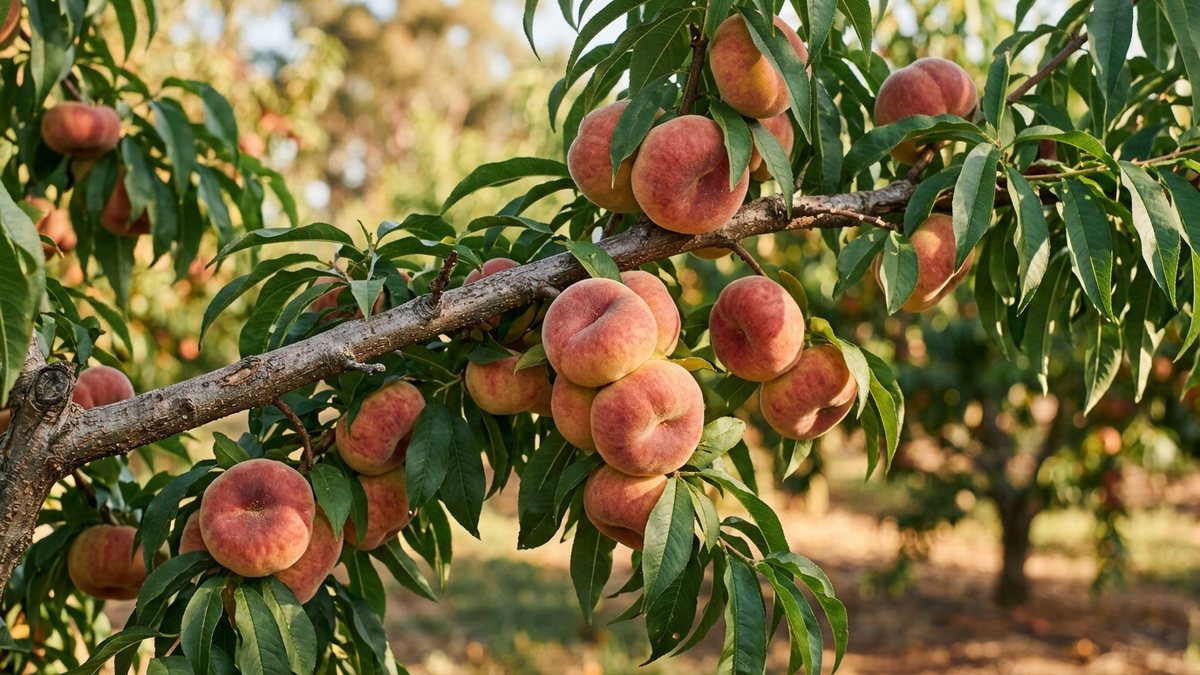
Stone fruit is pruned in summer in New Zealand, straight after the harvest, and never in winter. That is the opposite of apples and pears, and the reason is silver leaf, a fungal disease that enters fresh cuts in cool, wet weather. This page gives the months for each region, a diagram of how an open vase tree is built from planting day, and a short note on each fruit, because peaches fruit on very different wood from plums.
Why Not Winter?
Silver leaf spores are released in cool, wet weather from autumn to spring and infect through fresh wounds. A winter cut on a plum or cherry can let the fungus into the wood, where it kills branches over the next one or two seasons. The Yates New Zealand silver leaf page describes summer pruning straight after harvest as the exception to the usual winter pruning of deciduous trees for this reason, and the Royal Horticultural Society silver leaf page also recommends summer pruning of susceptible trees. Bacterial canker enters stone fruit the same way, so the same timing protects against both. See our silver leaf and bacterial canker pages for the symptoms.
When to Prune Stone Fruit in Your Region
| Region | Prune after harvest | Latest, with sealed cuts |
|---|---|---|
| Northland and Auckland | December to February | Early March |
| Waikato and Bay of Plenty | January to March | Early April |
| Wellington | January to March | Early April |
| Nelson and Marlborough | January to March | Early April |
| Central North Island | February to March | Early April |
| Canterbury | February to March | Early April |
| Otago and Southland | February to March | Early April |
| Central Otago | January to March | Early April |
These months follow typical harvest times, so move them if your fruit ripens early or late. Choose a dry, warm spell, because a dry day lets the cut seal quickly. Our nectarine guide gives the same rule: prune in late summer after fruiting, or in early to mid autumn at the latest, sealing cuts if you prune in autumn. Use a registered wound sealant if you want one, following the label.
Building an Open Vase by Tree Age
- Planting day: cut the single stem whip back to about 60 cm, just above a bud, so that it branches low.
- First summer: choose three or four evenly spaced shoots as the main limbs and remove the rest. Shorten each chosen limb by about a third after harvest.
- Year two: lightly tip the main limbs and select one or two side branches on each, spaced so the fruiting wood is not crowded.
- Year three onwards: remove anything growing into the centre, keep the shape open like a hand with the fingers spread, and renew fruiting wood each year as the table below describes.
What Each Stone Fruit Needs
| Fruit | Where it fruits | What to cut | Notes |
|---|---|---|---|
| Peach and nectarine | On shoots grown last season, so the wood that has just fruited should be renewed every year | Cut out wood that has fruited and keep the strong new shoots for next season, then thin the centre | Spray a registered copper product at leaf fall and again at bud swell, following the label |
| Apricot | On short spurs of older wood and on last year’s shoots | Light pruning only: remove dead wood, crossing branches and a few of the oldest spurs | Flowers very early, so keep pruning cuts small and pick a sheltered site |
| Plum | On spurs and last year’s shoots; Japanese types are vigorous and can crowd themselves | Thin crowded branches, shorten the longest shoots and keep the centre open | Among the most susceptible to silver leaf, so never prune in winter |
| Cherry | On spurs of older wood | Prune as little as possible: dead wood, crossing branches and any vigorous uprights | Cherries rarely crop in warm Northland, so check your district first |
Peach and nectarine fruit on one year old shoots, so after harvest cut out the branches that carried this year’s crop back to a strong new shoot, which becomes next season’s fruiting wood. Apricots and plums form fruiting spurs that keep cropping for several years, so they need much less cutting. All stone fruit benefits from fruit thinning when the fruit is small, which lightens the load on the branches.
Peach leaf curl is controlled before the buds open, not after the curled leaves appear. Copper products registered for the job go on at leaf fall in autumn and again at bud swell in late winter, as described on our peach leaf curl page.
Common Mistakes
- Pruning plums or cherries in July, when the trees are bare and easy to see but the weather is at its wettest.
- Leaving the prune until the tree is too big, then cutting it hard in autumn.
- Pruning in rain or just before rain.
- Composting infected prunings. Cut out silvered or dead branches well below the visible damage, and burn or bin them.
- Cutting a peach back so hard that no fruiting wood remains.
Frequently Asked Questions
When should I prune plum trees in NZ?
Prune plums in summer, straight after harvest, which means December to March depending on your region and variety. Avoid winter, because plums are among the most susceptible to silver leaf.
When should I prune a peach tree?
Prune peaches and nectarines after harvest, in late summer or early autumn, by cutting out the wood that has just fruited. Do not prune in winter, which lets silver leaf and bacterial canker into the cuts.
Can I prune apricots and cherries in winter?
No. Both are prone to bacterial canker and silver leaf, which enter through winter pruning wounds. Prune lightly after harvest on a dry day.
How do I reduce the size of a stone fruit tree?
Do it a little each summer by shortening the tallest limbs back to a lower side branch. A hard cut in one year triggers a flush of vigorous upright shoots, so spread a reduction over two or three summers.
Sources: the Yates New Zealand silver leaf page, the Royal Horticultural Society silver leaf page, the Tui Garden fruit tree pruning guide and our own nectarine and peach leaf curl pages. The month table is our guide, based on typical harvest windows.