
Habanero Chilli in New Zealand: Heat, Growing and Varieties
Updated November 2026
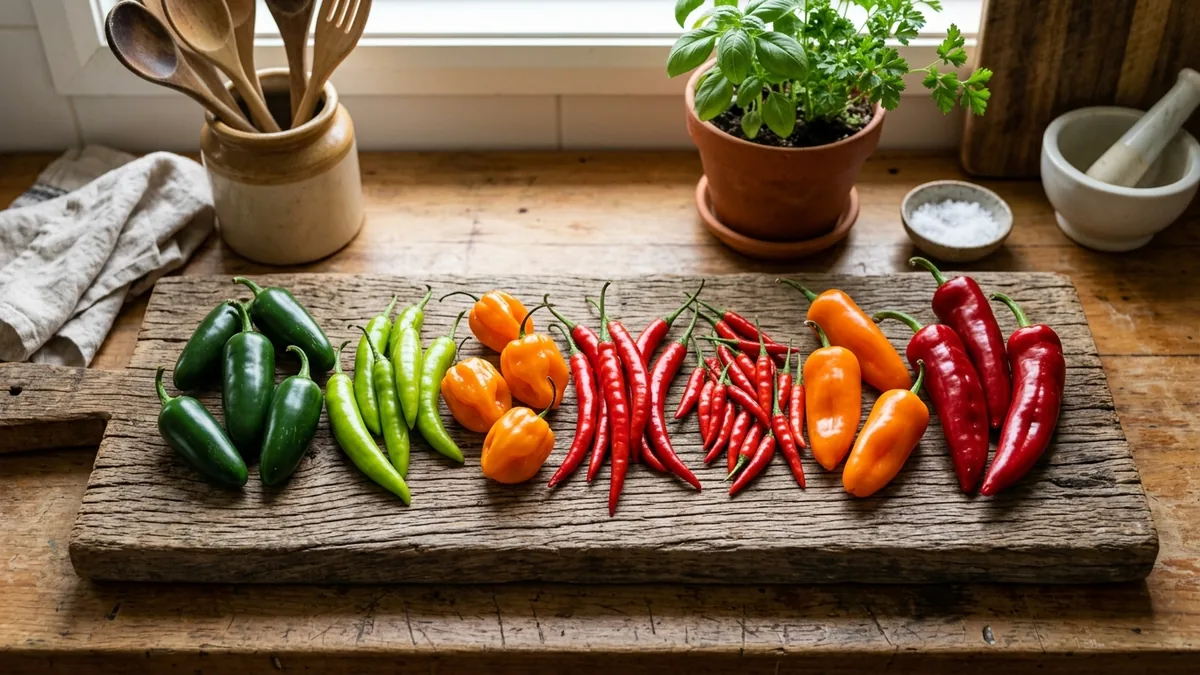
A very hot, fruity chilli that needs a warm start and a sheltered spot in New Zealand.
Habanero is a very hot chilli (Capsicum chinense) rated at about 100,000 to 350,000 Scoville heat units, with a fruity, floral taste. It can be grown in New Zealand, but it is slow and wants warmth, so raise seed indoors on bottom heat, plant out only when frost has passed, and use a glasshouse, tunnel or a pot on a sunny north-facing wall anywhere south of Auckland and Waikato.
What is a habanero?
The habanero is a small, lantern-shaped chilli that belongs to a different species from most garden chillies. Jalapeno, cayenne and banana peppers are all Capsicum annuum, while habanero is Capsicum chinense. That species difference is the reason it behaves differently in a cool New Zealand garden: it germinates more slowly, grows more slowly and wants steadier warmth right through the season.
Habanero is usually listed at 100,000 to 350,000 on the Scoville scale, the measure created by the American pharmacist Wilbur Scoville in 1912. Our own chilli heat scale uses the same range, and Yates New Zealand gives it for its habanero seed too. For comparison, a jalapeno sits at roughly 2,500 to 8,000, so a habanero is many times hotter. Individual fruit vary with the season and how the plant was grown: warmth, full sun and slight water stress push the heat up, while a cool wet summer keeps it down.
The fruit are about the size of a large grape or small plum, wrinkled and bell-shaped. The common sorts ripen from green to orange or scarlet red, and yellow types are also sold. The flavour is the draw: fruity and slightly floral, with the heat arriving fast and lingering. In the kitchen it is used in hot sauce, salsa and marinades, and a little goes a very long way. Wear gloves when you cut it and wash your hands well afterwards, and keep the seeds and pith away from your eyes. Our hot sauce guide covers what to do with a heavy crop.
Quick facts for New Zealand growers
| Question | Answer |
|---|---|
| Species | Capsicum chinense |
| Heat | About 100,000 to 350,000 Scoville heat units |
| Days to first fruit | About 91 days (13 weeks) from sowing, according to the Yates New Zealand seed listing |
| Germination | Roughly 7 to 10 days when warm, often longer in a cool house |
| Spacing | About 20 cm in a pot or row according to Yates, and 45 cm in our regional data for open ground |
| Pot size | 30 cm wide or more, 14 litres or larger |
| Frost | Tender, so no planting out until frost is over |
When to sow habanero in New Zealand
Our regional calendars give these sowing months for chilli. Habanero is the slowest of the common chillies, so sow at the early end of your region's window if you can give the seed real warmth, and never sow earlier than the first month shown.
| Region | Sowing months |
|---|---|
| Northland | Sep to Dec |
| Auckland | Sep to Dec |
| Waikato & Bay of Plenty | Sep to Dec |
| Central North Island | Nov to Dec |
| Wellington & Lower North Island | Oct to Dec |
| Nelson & Marlborough | Oct to Dec |
| Canterbury | Nov to Dec |
| Otago & Southland | Nov to Dec |
| Central Otago | Dec |
The Kings Seeds chilli collection suggests sowing indoors in late winter to spring and planting out in October and November once the soil has warmed. That fits the northern regions. Further south the short season matters more than the sowing date. The frost dates page gives typical last spring frosts of about 25 September in Waikato and Bay of Plenty, 10 October in Canterbury, 15 October in the Central North Island, 25 October in Otago and Southland and 5 November in Central Otago. Auckland and Northland are frost free on the coast. Habanero plants should not meet a frost, so work from your own last frost and add a week or two of margin, because a frost pocket or a cold southerly can arrive late.
Germination: give it bottom heat
Habanero seed is the slowest chilli seed to wake up, and cool potting mix is the usual reason a tray sits there doing nothing. Kings Seeds gives a germination range of about 20 to 30 degrees for chillies in general, and the seeds do best at the warm end. A seedling heat mat with a thermostat, or a heated propagator, is worth having for habanero.
- Fill a tray or small pots with fresh seed-raising mix and sow the seed about 5 mm deep, which is the depth Yates gives.
- Keep the mix evenly damp, not wet, and put it on bottom heat or the warmest shelf in the house.
- Expect seedlings in 7 to 10 days if the mix stays warm, and be patient for up to three weeks if it does not. Our seed raising guide has the general method.
- Once seedlings are up, give them the brightest window you have or a grow light. Leggy seedlings on a dim sill are slow to recover.
- Pot them on when they are about 5 cm tall, which is when Yates suggests transplanting, and again when the roots fill the pot.
Growing habanero in a short, cool season
Glasshouse, tunnel or warm wall
North of Auckland and in sheltered parts of the Waikato and Bay of Plenty, habanero can be planted in a hot, sunny bed or large pot outdoors. South of that, a glasshouse, a tunnel house or a cloche over the plant gives the extra weeks the fruit need to colour. Nelson and Marlborough have plenty of sun, and Wellington has plenty of wind, so a sheltered spot matters there. In Canterbury, Otago and Southland a glasshouse or tunnel is the realistic option for a good crop, and in Central Otago a tunnel or a pot against a hot north-facing wall is the safest approach.
If you have no covered space, pots are the answer. Stand a large pot against a north-facing wall of the house, where the brick or weatherboards store heat through the evening, and move it into shelter on nights that threaten frost. Our chillies in pots guide covers pot size, mix and watering in detail. Dark pots heat the roots in strong sun, so a pale pot or a stand helps.
Spacing, feeding and watering
Plants grow into a bushy shrub about knee to waist high. Yates lists 20 cm between plants in a pot or row, while our regional data uses 45 cm for open ground, and the wider spacing is the safer choice in a glasshouse where air movement is poor. Dig blood and bone or compost into the bed before planting, as Yates suggests, and start feeding once flowers appear, using a fertiliser aimed at fruit and following the label. Too much nitrogen gives lush leaves and few fruit.
Water when the top few centimetres of mix or soil have dried. A little dryness between waterings concentrates the heat, but a plant that wilts while it is flowering will drop its flowers. Flower drop is also common when nights are cold or days exceed about 32 degrees in a closed glasshouse, so vent on hot days. Our how to grow chilli page lists the usual causes of flowers that fall without setting fruit.
Picking habanero
Fruit can be picked green, but Yates notes that it gets hotter as it matures to scarlet red, and the fruity flavour only develops with colour. Pick with scissors or secateurs and leave a short stalk on the fruit. Regular picking encourages new flowers, and in a short season it pays to pick the first ripe fruit promptly so the plant puts its energy into the rest. Before the first frost, harvest everything that has begun to colour. Green fruit will often finish ripening indoors on a warm windowsill, although it never matches fruit ripened on the plant.
Varieties sold in New Zealand
Several habanero types are sold here. The ones below come from seller pages we read in November 2026.
- Habanero (Yates). The listing gives 13 weeks (91 days) to maturity, scarlet red fruit and a heat of 100,000 to 350,000. It is widely sold in garden centres and hardware stores.
- Habanero Red and Habanero Yellow (Kings Seeds). Both appear in the Kings Seeds chilli range. Yellow fruit are a good choice if you want a change of colour in a sauce.
Seed catalogues change from year to year, so check the packet for days to maturity and heat. A garden centre packet is fine for a first season, and a longer-season variety is a bigger gamble in the south.
Pests and problems in New Zealand
Habanero suffers from the same pests as other chillies, and warm sheltered growing makes some of them worse. Aphids cluster on the soft new growth and cause curled leaves, and whitefly builds up fast in a closed glasshouse. Thrips and spider mite can also show up in hot dry conditions. Check the undersides of leaves weekly, squash or wash off small colonies and encourage ladybirds. If you decide to spray, use a registered product, used to the label. Yates also advises protecting young plants from slugs and snails. Good airflow and sensible watering prevent most fungal problems.
Overwintering habanero indoors
Habanero is a short-lived perennial, and in a frost-free spot it will carry on for a second and third season. In colder regions, lift the plant or bring its pot indoors before the first frost. Cut it back by about half, remove any remaining fruit and yellowing leaves, and keep it in the brightest window, a heated glasshouse or under a grow light. Water sparingly through winter, keep the mix just damp, and do not feed until new growth starts in spring. Check weekly for aphids and whitefly, because indoor plants spread pests quickly. Overwintered plants usually fruit earlier the next summer, which matters a lot in a short season.
Saving habanero seed
Habanero seed saves true if you grow one variety, but chillies cross readily by insects. Isolate plants or cover a flower truss with a fine mesh bag if you want pure seed. Choose a fully ripe fruit from your strongest plant, scoop out the seeds with gloves on, and dry them on a plate or paper for a week or two in a warm, shaded spot until they snap rather than bend. Store them in a paper envelope in a cool dry place. Our seed saving guide covers the general method.
Related chillies
If a habanero is more heat than you want, jalapeno is the everyday medium chilli and banana pepper is sweet and mild. Our chilli and pepper varieties guide compares the whole range, growing hot peppers covers the very hot end, and the chilli plant page has sowing times for your region.
Questions
How hot is a habanero?
A habanero is usually rated at about 100,000 to 350,000 Scoville heat units. A jalapeno is roughly 2,500 to 8,000, so a habanero is many times hotter.
Can you grow habanero in New Zealand?
Yes, in a warm site. Raise seed indoors on bottom heat and plant out after frost, and south of Auckland and Waikato use a glasshouse, tunnel or a pot on a sunny north-facing wall.
How long does a habanero take to fruit?
The Yates New Zealand seed listing gives 13 weeks, about 91 days, to maturity. In a cool season expect longer.
Why is my habanero seed not germinating?
The mix is almost certainly too cool. Habanero seed wants warmth of about 20 to 30 degrees and can take up to three weeks, so use a heat mat or heated propagator.
Can I overwinter a habanero plant?
Yes. Bring it indoors before the first frost, cut it back by about half, keep it in bright light and water sparingly until spring.
Where do I buy habanero seed in New Zealand?
Yates habanero is sold at garden centres and hardware stores, and Kings Seeds sells Habanero Red and Habanero Yellow.
Sources
- Yates New Zealand: Chilli Habanero seed
- Kings Seeds NZ: Chilli and pepper collection
- Scoville scale overview (Wilbur Scoville, 1912)
Plant profile
The chilli profile has sowing times for your region, companion plants and common pests.