
Chilli and Pepper Varieties Ranked by Heat and Use for New Zealand Gardens
Updated November 2026
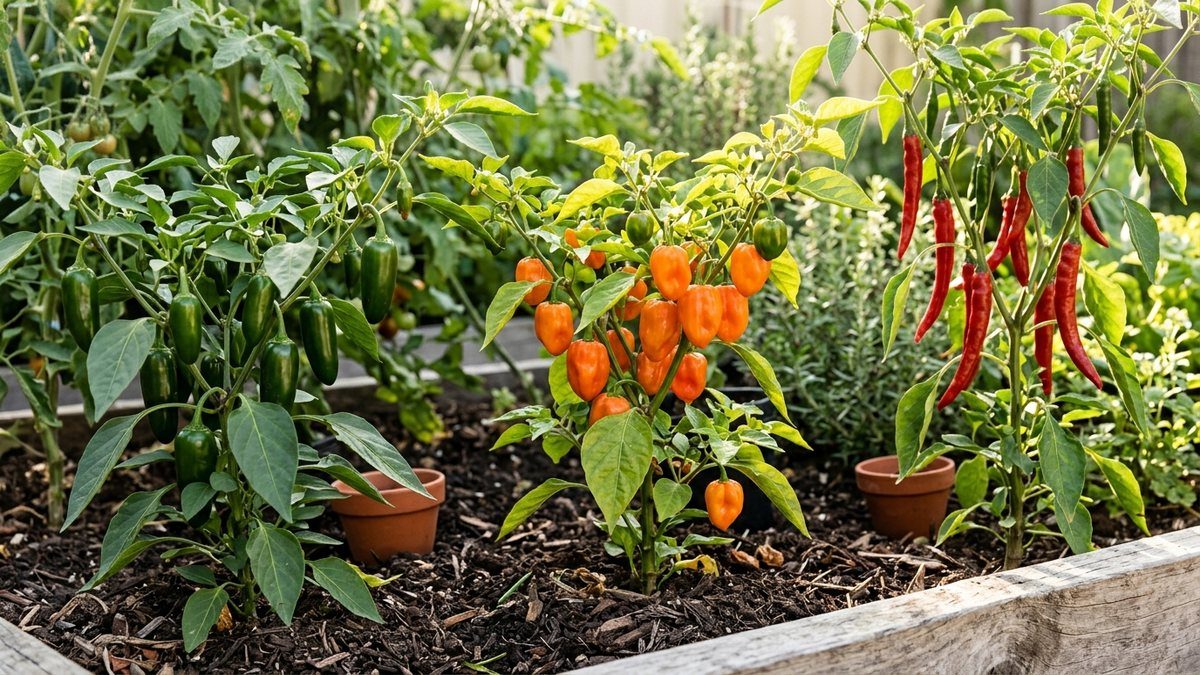
24 chillies and peppers ranked by heat, species and use, with difficulty in New Zealand gardens
This page lines up 24 chillies and peppers from sweet capsicum to the Carolina Reaper, showing the species, heat range and the kitchen job of each. Heat figures are typical Scoville ranges and agree with our chilli heat scale, whose heat picker you can use to sort and filter the same plants. The question for most New Zealand gardeners is not just how hot a chilli is but whether it will ripen before autumn.
Five species are grown. Annuum gives capsicum, jalapeno, shishito and cayenne, which are the realistic outdoor crops in a New Zealand summer. Chinense gives habanero, scotch bonnet and the superhots, which want a glasshouse, tunnel or pot. Frutescens brings tabasco and piri piri, baccatum brings the aji chillies, and pubescens brings the cool-tolerant rocoto.
Reading a Scoville number
Scoville Heat Units rate how much heat a chilli carries. Sweet capsicum scores 0, jalapeno roughly 2,500 to 8,000, habanero roughly 100,000 to 350,000, and the top superhots pass 1 million. The ranges here are the commonly published ones, such as those from the Chile Pepper Institute at New Mexico State University. A plant can finish anywhere inside its range, and in a cool New Zealand summer many finish low, so treat the figure as a ceiling you may not reach. The heat scale guide shows how to coax fruit up towards the top.
Twenty-four chillies ranked from mild to fierce
The difficulty column describes a typical New Zealand garden. Moderate means the plant ripens in a decent warm summer if started early. Slow means it needs the longest season you can offer. Glasshouse or pot means it will rarely finish outdoors beyond the warmest northern spots.
| Name | Species | Heat (SHU) | Ripe colour | What it is and how it is used | Difficulty in New Zealand |
|---|---|---|---|---|---|
| Capsicum | C. annuum | 0 | Red, yellow, orange | Sweet and thick walled, with no heat. Raw in salads, roasted or stuffed. | Moderate |
| Pimento (cherry pepper) | C. annuum | 100 to 500 | Red | Small, sweet and heart shaped. Good for stuffing and for jars. | Moderate |
| Banana pepper | C. annuum | 0 to 500 | Yellow to orange or red | Long, pale and gentle. Pickled, or sliced onto sandwiches. | Moderate |
| Shishito | C. annuum | 50 to 200 | Red | Thin walled Japanese pepper, eaten green. Blistered in a hot pan. | Moderate |
| Padron | C. annuum | 500 to 2,500 | Red | Small Spanish pepper, cut young. Fried whole with salt. | Moderate |
| Anaheim | C. annuum | 500 to 2,500 | Red | Long and mild, the fresh version of dried New Mexico chile. Roasted or stuffed. | Moderate |
| Poblano (ancho) | C. annuum | 1,000 to 2,000 | Dark red | Broad, dark green and gentle. Stuffed or made into mole; dried, it becomes ancho. | Moderate |
| Hungarian wax | C. annuum | 1,000 to 15,000 | Yellow to red | Waxy yellow chilli whose heat swings widely. Pickled, fried or in salsa. | Moderate |
| Fresno | C. annuum | 2,500 to 10,000 | Red | Jalapeno-like but fruitier, turning red. Raw, in salsa or pickled. | Moderate |
| Jalapeno | C. annuum | 2,500 to 8,000 | Red | Glossy, thick walled and medium hot, the usual yardstick. Salsa, nachos and everyday cooking. | Moderate |
| Serrano | C. annuum | 10,000 to 25,000 | Red | Slim and crisp, hotter than a jalapeno. Raw salsa and guacamole. | Moderate |
| Cayenne | C. annuum | 30,000 to 50,000 | Red | Long, thin walled and hot. Strung and dried, then ground or flaked. | Moderate |
| Rocoto (manzano) | C. pubescens | 30,000 to 100,000 | Red, orange or yellow | Apple shaped, with black seeds and hairy leaves, and more tolerant of cool weather. Stuffed or made into sauce. | Moderate |
| Aji limon (lemon drop) | C. baccatum | 15,000 to 30,000 | Yellow | Slim yellow fruit with a citrus note. Ceviche, sauce or raw. | Slow |
| Aji Amarillo | C. baccatum | 30,000 to 50,000 | Orange | Fruity golden chilli at the heart of Peruvian cooking. Sauces and stews. | Slow |
| Tabasco | C. frutescens | 30,000 to 50,000 | Red | Tiny upright fruit, the chilli in the famous sauce. Fermented sauce. | Slow |
| Thai bird's eye | C. annuum | 50,000 to 100,000 | Red | Small and fierce on a bushy plant. Stir-fries, curries or raw. | Moderate |
| African bird's eye (piri piri) | C. frutescens | 50,000 to 100,000 | Red | Compact and very hot, often kept as a perennial in warm spots. Marinades and piri piri sauce. | Slow |
| Datil | C. chinense | 100,000 to 300,000 | Yellow to orange | Habanero-strength with a sweet, fruity edge. Jellies and sauces. | Glasshouse or pot |
| Habanero | C. chinense | 100,000 to 350,000 | Orange or red | Lantern shaped with floral, fruity heat. Hot sauce, salsa and marinades. | Glasshouse or pot |
| Scotch bonnet | C. chinense | 100,000 to 350,000 | Red, yellow or orange | Squat Caribbean cousin of the habanero, a touch sweeter. Jerk and sauces. | Glasshouse or pot |
| Ghost (bhut jolokia) | C. chinense | 800,000 to 1,041,427 | Red | Superhot from north-east India. A sliver goes into sauce. | Glasshouse or pot |
| Trinidad Scorpion | C. chinense | 1,200,000 to 2,000,000 | Red | Superhot with a pointed tail. Extreme sauces, tiny amounts. | Glasshouse or pot |
| Carolina Reaper | C. chinense | 1,400,000 to 2,200,000 | Red | Record-holding superhot with bumpy, tailed fruit. Extreme sauces. | Glasshouse or pot |
Chipotle turns up in recipes but is not a variety. It is simply a ripe red jalapeno dried over smoke, so the heat matches a jalapeno and the flavour is smoky.
Which species ripen where
Annuum, the dependable group
Capsicum, banana pepper, shishito, padron, anaheim, poblano, hungarian wax, fresno, jalapeno, serrano, cayenne and Thai bird's eye all belong here. They ripen fastest, which counts for a lot when summer is brief. In Northland, Auckland and the Bay of Plenty most will colour up outdoors in a sunny, sheltered spot. Our capsicum guide covers the sweet end of the family.
Chinense, the long haul
Habanero, scotch bonnet, datil, ghost, Trinidad Scorpion and Carolina Reaper take the longest, so they are the ones that need a glasshouse, a tunnel or a pot kept hard against a warm wall. Start them first, and expect fruit late in the season even in the north.
Frutescens and baccatum
Tabasco and piri piri are small, upright and very hot. The aji chillies, amarillo and limon, are tall, fruity and slow. Both groups do best with the same help as chinense: shelter, warmth and an early start.
Pubescens, the cool-weather exception
Rocoto tolerates cooler conditions better than any other chilli, which makes it worth a try in the lower North Island and the South, though it still dislikes frost and takes its time.
Sourcing seed and plants
Seed and seedlings are sold across New Zealand, so read the listing for the variety you want and compare its days to maturity with your own season. Begin with the Kings Seeds and Egmont Seeds ranges and then try a local garden centre. Species and typical heat are given here in place of a seller list, since stock shifts from season to season.
Choosing for the kitchen
- Gentle and sweet: capsicum, banana pepper, shishito, padron, anaheim and poblano.
- Medium for salsa and the stove: jalapeno, hungarian wax, fresno and serrano.
- For drying and powder: cayenne and Thai bird's eye, whose thin walls dry on a string.
- For fermenting: tabasco, piri piri, habanero and scotch bonnet, as in our hot sauce guide.
- Courtyards and decks: compact annuum and frutescens types, as described in chillies in pots.
- The superhots: a tiny quantity at a time. Wear gloves and keep hands away from your face.
Guides to individual chillies
Each of these says what the chilli is first, then how to grow it.
- Habanero, the benchmark hot chilli and close relative of the scotch bonnet.
- Jalapeno, the everyday medium chilli.
- Banana pepper, the sweet pickling pepper.
Sowing months by region
Every chilli is slow to germinate, so the month you sow decides the harvest. Below is the live planner data for chilli in general. Slow types such as habanero and the superhots belong at the early edge of each window, or earlier still indoors.
| Region | Sowing months |
|---|---|
| Northland | Sep to Dec |
| Auckland | Sep to Dec |
| Waikato & Bay of Plenty | Sep to Dec |
| Central North Island | Nov to Dec |
| Wellington & Lower North Island | Oct to Dec |
| Nelson & Marlborough | Oct to Dec |
| Canterbury | Nov to Dec |
| Otago & Southland | Nov to Dec |
| Central Otago | Dec |
The planner assumes about 90 days to harvest and 45 cm between plants. Our hubs for Auckland and Wellington list what to sow near you.
Summers here are shorter and cooler than across the Tasman, which changes the plan. In Northland, Auckland and Waikato and Bay of Plenty, the annuum chillies ripen outside and the slower types are better under glass or in a pot. Further south, in Canterbury, Otago and Southland and Central Otago, sow early indoors, pick the quicker types and keep plants under cover. Check the frost dates page for the last frost where you live.
Habits that suit every variety
Whatever you grow, give it sun, free-draining soil and warmth, and feed regularly once flowers appear. Frost kills the lot, and cold soil stalls the seed. Sow into seed raising mix and keep it warm, then follow how to grow chilli and growing hot peppers. For a balcony or a chilly site, chillies in pots covers container size and position.
To raise the heat, hold back on water after fruit sets and leave the fruit on the plant until it reaches its final colour. Early green picking keeps plants cropping, while fully coloured fruit is hotter and sweeter. The chilli plant page lists companions and pests.
Questions
What is cayenne pepper?
Cayenne is a long, thin-walled red chilli, Capsicum annuum, rated around 30,000 to 50,000 Scoville Heat Units. Dried and ground, it becomes the spice of the same name, and it is among the easiest hot chillies to ripen here.
How hot is a habanero in New Zealand?
A habanero is rated roughly 100,000 to 350,000 Scoville Heat Units, far above a jalapeno at 2,500 to 8,000. Our summers are short, so grow it in a glasshouse, a tunnel or a pot in your sunniest corner.
What does the Scoville number tell me?
It is a measure of heat, running from 0 for sweet capsicum to beyond 2 million for the hottest superhots. Each figure is a typical range, since growing conditions move the result.
Which chillies ripen most easily outdoors here?
Cayenne, jalapeno, hungarian wax and the mild peppers such as banana pepper ripen in an ordinary warm summer, especially in the north. Habanero and scotch bonnet usually need protection.
Can I grow chillies in Canterbury or Otago?
Yes, with an early indoor start, quicker types and cover such as a tunnel or a pot against a warm wall. Our chillies in pots guide covers the details.
Sources
- Chile Pepper Institute, New Mexico State University (Scoville ranges and species)
- Scoville scale overview (heat unit definition)
Plant profile
The chilli profile has sowing times for your region, companion plants and common pests.