
Jalapeno Chilli in New Zealand: Heat, Growing and Varieties
Updated November 2026
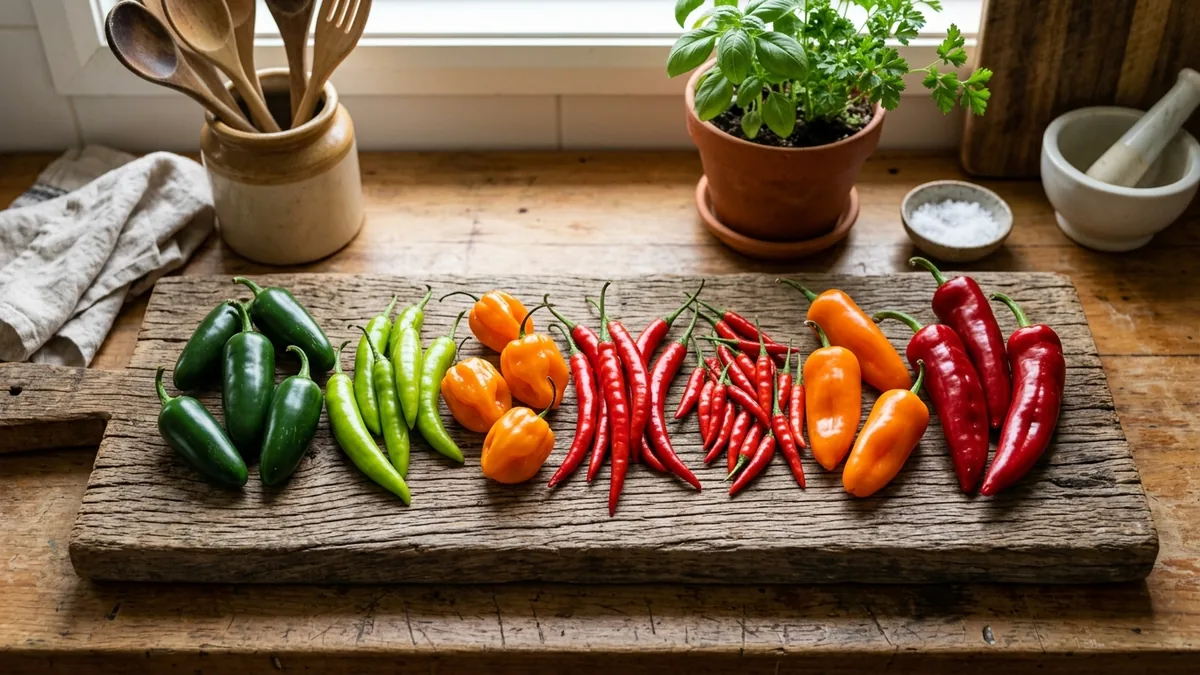
The everyday medium-heat chilli, and the easiest hot one to grow in a short New Zealand season.
Jalapeno is a thick-walled, medium-hot chilli (Capsicum annuum) rated at roughly 2,500 to 8,000 Scoville heat units. It is the easiest hot chilli to grow in New Zealand: start seed indoors in warmth, plant out after the last frost into a sunny, sheltered spot or large pot, and expect fruit about 13 weeks from sowing.
What is a jalapeno?
The jalapeno is a plump, finger-length chilli with glossy dark green skin and thick flesh that turns red if left on the plant. It is the benchmark medium chilli, hot enough to notice but mild enough to eat by the slice. On our chilli heat scale it sits at about 2,500 to 8,000 Scoville heat units, the scale devised by the pharmacist Wilbur Scoville in 1912. Other references give the top of the range as high as 10,000, which shows how much heat varies from fruit to fruit and season to season. A hot, dry, sunny summer produces hotter jalapenos than a cool wet one.
The taste is green, grassy and slightly bright when picked green, and sweeter and fruitier once the fruit ripens to red. The thick walls make it a good chilli to stuff, slice into rings, pickle or roast. Smoke-dried ripe jalapenos are sold as chipotle. Koanga Institute describes its jalapeno as a good chilli for pickling whole in a lactic ferment, or pureeing into a tabasco-style sauce. Our hot sauce guide covers sauce making, and the pith and seeds hold most of the heat if you want a milder result.
Jalapeno is the same species as banana peppers and ordinary capsicums, so it is more forgiving than the very hot habaneros. It germinates faster, fruits sooner and sets fruit on a smaller plant, which is why it suits cooler parts of New Zealand better than habanero.
Jalapeno at a glance
| Question | Answer |
|---|---|
| Species | Capsicum annuum |
| Heat | Roughly 2,500 to 8,000 Scoville heat units |
| Days to first fruit | 91 days (13 weeks) from sowing, from the Yates New Zealand seed listing |
| Germination | 7 to 14 days when warm; Koanga advises an even 18 degrees |
| Plant spacing | 20 cm in a pot or row (Yates) up to 30 cm (Koanga) when planted out |
| Pot size | 25 to 30 cm wide, 9 to 14 litres |
| Fruit | Thick-walled, tapered, green turning red |
When to sow jalapeno in New Zealand
These sowing months come from our regional calendars for chilli, and jalapeno follows the same window. Do not sow earlier than the first month for your region, however warm your windowsill is, because the plants will be ready long before it is safe to put them outside.
| Region | Sowing months |
|---|---|
| Northland | Sep to Dec |
| Auckland | Sep to Dec |
| Waikato & Bay of Plenty | Sep to Dec |
| Central North Island | Nov to Dec |
| Wellington & Lower North Island | Oct to Dec |
| Nelson & Marlborough | Oct to Dec |
| Canterbury | Nov to Dec |
| Otago & Southland | Nov to Dec |
| Central Otago | Dec |
Koanga Institute advises sowing in trays indoors in early spring, and transplanting once the danger of frost has passed, with cloches if necessary. Yates says early sowings should be protected or started indoors. The frost dates page gives typical last spring frosts of about 25 September in Waikato and Bay of Plenty, 20 September in Nelson and Marlborough, 10 October in Canterbury, 15 October in the Central North Island, 25 October in Otago and Southland and 5 November in Central Otago, while Auckland and Northland are frost free on the coast. Those are regional midpoints, so add a week or two of margin in a cold pocket.
Germination and raising seedlings
Jalapeno is not fussy, but the seed still needs warmth. Cool mix is the usual reason seed fails to come up, and a heat mat or a warm shelf near a hot water cylinder makes a big difference. Kings Seeds gives a germination range of about 20 to 30 degrees for chillies, while Koanga says an even 18 degrees will do for its jalapeno.
- Sow seed 5 mm deep in seed-raising mix, firm it down and keep it evenly damp. Our seed raising guide covers the method.
- Put the tray on bottom heat or the warmest spot in the house, and expect seedlings in about one to two weeks.
- When the second leaves appear, prick out the seedlings into small pots or cell trays. Koanga suggests 2.5 cm apart and then 10 cm apart or in individual pots once the leaves touch.
- Give seedlings the brightest light you have. Yates suggests transplanting at about 6 cm tall.
- Harden plants off over a week before planting out, moving them outside for a few hours a day at first.
Growing jalapeno in a short, cool season
Where to plant
Jalapeno needs full sun and a well-drained position. In Northland, Auckland and the warmer parts of Waikato and Bay of Plenty it will crop in a sunny, sheltered bed from October onwards. In Nelson and Marlborough, Wellington and Canterbury it does well in a bed against a north-facing wall or fence, or under a cloche for the first few weeks. In Otago, Southland, the Central North Island and Central Otago the season is short, so a glasshouse or tunnel house gives a far more reliable crop. Where you have nothing covered, grow it in a pot on a sunny deck or against a warm north-facing wall, where the pot stores heat and can be moved to shelter when a frost threatens.
Our chillies in pots guide recommends a pot at least 25 cm wide, about 9 litres, for jalapeno, and up to 14 litres for a big plant. Keep it well drained, and use a pale pot or stand it off the ground so the roots do not cook in strong sun.
Feeding and watering
Dig blood and bone or compost into the bed before planting, which is what Yates recommends, and feed regularly once flowering starts. Yates suggests an all-purpose granular plant food, and a fertiliser higher in potassium helps fruit set. Follow the label rate. Too much nitrogen gives a big leafy plant with few chillies. Water when the top few centimetres have dried, and avoid letting a flowering plant wilt, because it will drop its flowers. Slight dryness between waterings tends to give hotter fruit. If flowers fall without fruit, our chilli guide covers the usual causes, which are cold nights, very hot days and uneven watering.
Picking jalapeno
Pick jalapenos green when they are glossy, firm and about 6 to 9 cm long, or leave them on the plant to ripen to red for a sweeter, hotter fruit, which is what Yates suggests. You will often see fine brown lines on the skin, called corking. This is normal and not a disease, and many people prize those fruit. Regular picking encourages the plant to keep flowering, so pick often. Use scissors or secateurs rather than pulling, because the branches are brittle. In a short season, pick everything of usable size before the first frost, and ripen red fruit indoors on a sunny windowsill if the plant is under threat.
Varieties sold in New Zealand
We read these seller pages in November 2026. Availability changes, so check the packet.
- Chilli Jalapeno (Yates). Listed at 91 days (13 weeks), described as moderately spiced, and sold in garden centres and hardware stores.
- Pepper Hot Jalapeno (Koanga Institute). A thick-walled, medium-heat jalapeno with a tapered shape that turns red at maturity, in a packet of 30 seeds.
- Organic Chilli Jalapeno Early (Kings Seeds). Listed in the Kings Seeds chilli collection, and a good choice for a short season because an early type should ripen sooner than a standard one.
- El Scorcho (South Pacific Seeds). A commercial jalapeno type described as producing high volumes of large, smooth fruit. Jalapeno seed from D.T. Brown and Johnsons is also sold through Bunnings.
Pests and problems in New Zealand
Jalapeno has the same pest list as other chillies. Aphids curl the new growth, whitefly thrives in a closed glasshouse, and thrips can scar the fruit in hot dry weather. Slugs and snails chew young plants, so protect seedlings after planting out, as Yates advises. Look under the leaves once a week, squash small colonies and encourage ladybirds. If you spray, use a registered product, used to the label. The tomato potato psyllid also attacks chillies in New Zealand, so watch for yellowing, curled new leaves and sticky residue. Corky scars on the skin are cosmetic and are not a sign of pests.
Overwintering jalapeno
Jalapeno is a perennial in frost-free spots. Bring the pot indoors before the first frost, or in the glasshouse, cut back about a third of the growth, remove old fruit and keep the plant in bright light with sparing water. Do not feed until new growth appears in spring. A plant that survives the winter will fruit weeks earlier than a new seedling, which is an advantage in a short season. Check for aphids and whitefly regularly, because indoor plants are slow to dry out and pests spread fast.
Saving jalapeno seed
Chillies cross easily by insects, so isolate plants or cover a flower with a fine mesh bag if you want seed that comes true. Leave one or two of the best fruit on the plant until they are fully red and slightly wrinkled. Scoop out the seed with gloves on, dry it on paper in a shaded warm spot for one to two weeks until it snaps, and store it in a paper envelope somewhere cool and dry. Our seed saving guide has the general method.
Related chillies
For more heat, try habanero, and for a sweet, mild alternative look at banana pepper. Our chilli and pepper varieties guide compares the full range, growing hot peppers has the wider picture, and the chilli plant page shows sowing months for your region.
Questions
How hot is a jalapeno?
A jalapeno is roughly 2,500 to 8,000 Scoville heat units, which makes it a medium chilli. Some references quote up to 10,000.
Can I grow jalapeno in New Zealand?
Yes. It is the easiest hot chilli here. Start seed indoors in warmth, plant out after frost, and use a glasshouse, tunnel or sunny wall pot in the cooler south.
How long do jalapenos take to fruit?
The Yates New Zealand listing gives 91 days, about 13 weeks, from sowing to maturity.
Why do my jalapenos have brown lines?
Fine brown lines on the skin are called corking. They are normal stretch marks and the fruit is fine to eat.
Should I pick jalapenos green or red?
Either. Green fruit are picked firm and glossy, while red fruit are left to ripen on the plant and are sweeter and hotter.
Where do I buy jalapeno seed in New Zealand?
Yates, Kings Seeds and the Koanga Institute all sell jalapeno seed, and packets are also sold through garden centres and Bunnings.
Sources
- Yates New Zealand: Chilli Jalapeno seed
- Koanga Institute: Pepper Hot Jalapeno
- Kings Seeds NZ: Chilli and pepper collection
- South Pacific Seeds NZ: Jalapeno
Plant profile
The chilli profile has sowing times for your region, companion plants and common pests.