
Banana Pepper in New Zealand: Heat, Growing and Varieties
Updated November 2026
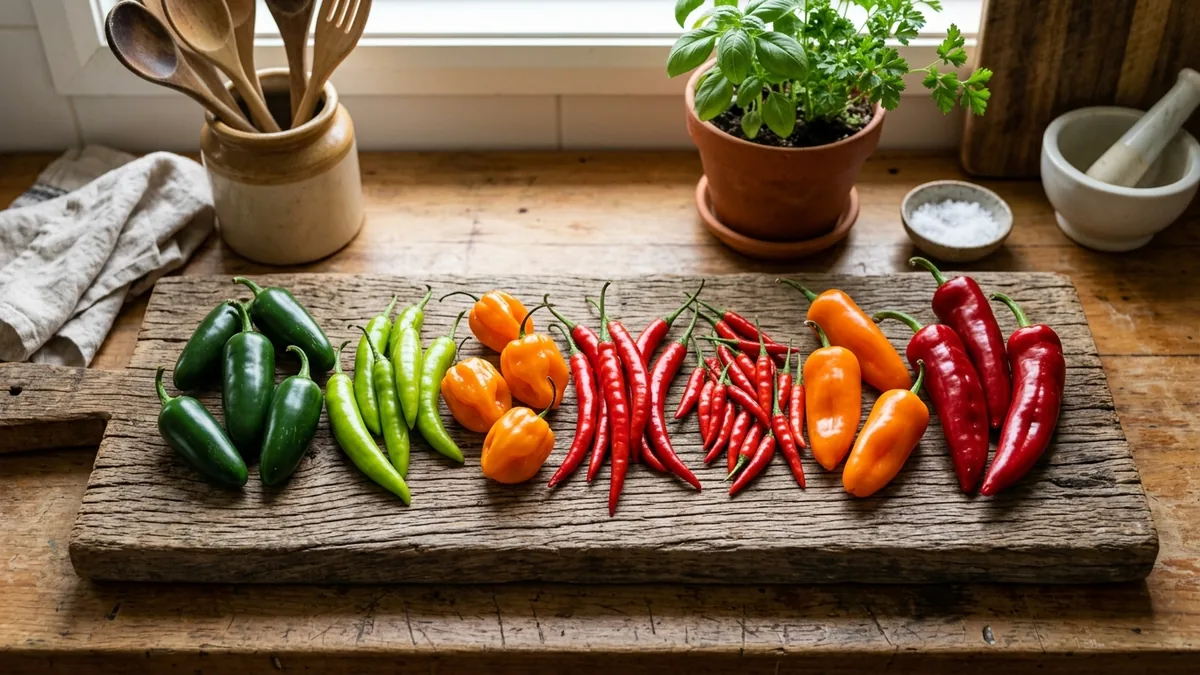
A sweet, mild yellow pepper that is easy to grow and easy to mistake for a hot banana chilli.
A banana pepper is a sweet, mild, pale yellow capsicum-type pepper (Capsicum annuum) rated at about 0 to 500 Scoville heat units, so it is barely hot at all. In New Zealand it is sold as "banana pepper", "sweet banana" or sometimes "banana chilli". It grows like a capsicum: warmth, a sunny sheltered spot and a long enough season, which in much of the country means a glasshouse, tunnel or pot against a warm wall.
What is a banana pepper?
A banana pepper is a long, tapered, slightly curved pepper that looks like a small banana. It starts pale yellow-green and ripens through yellow and orange to red. The heat is very mild. On our chilli heat scale it is listed at 0 to 500 Scoville heat units, the scale created by the pharmacist Wilbur Scoville in 1912, which puts it at the sweet end next to a capsicum and well below a jalapeno. The Kings Seeds New Zealand listing for Sweet Long Yellow Banana describes a light yellow to red, long and pointed fruit to about 15 cm.
The flavour is sweet and tangy with a thin crisp wall, and it is eaten raw in salads and sandwiches, pickled in rings, stuffed, or fried and roasted. It is the pepper that gives the crunch to pickled rings on a sub. It is one of the easiest peppers for beginners and for anyone who wants a productive plant without the burn.
Banana pepper or banana chilli?
The two names cause confusion because there are sweet and hot banana-shaped peppers. A true banana pepper is the sweet one. The hot lookalike is the Hungarian wax pepper, which has a similar yellow colour and shape but ranges from roughly 1,000 to 15,000 on our heat scale, so it can be as hot as or hotter than a jalapeno. Kings Seeds lists a Chilli Hungarian Yellow Wax. If you are buying seed or a seedling, read the label: if it says sweet or 0 to 500, it is a banana pepper, and if it says wax or hot, expect heat. Fruit of the two look so alike that mixing them up in the kitchen is a real risk, so label your plants.
| Pepper | Heat (Scoville units) | Taste and use |
|---|---|---|
| Banana pepper | 0 to 500 | Sweet, tangy, crisp; salads, pickled rings, stuffing |
| Hungarian wax | 1,000 to 15,000 | Mild to hot; pickling, frying, salsa |
| Jalapeno | 2,500 to 8,000 | Medium; everyday cooking |
Banana pepper at a glance
| Question | Answer |
|---|---|
| Species | Capsicum annuum |
| Heat | About 0 to 500 Scoville heat units |
| Days to first fruit | About 70 days from planting according to our chilli heat scale guide; seller listings vary, so check the packet |
| Fruit length | Up to about 15 cm (Kings Seeds) |
| Pot size | At least 25 cm wide, 9 litres or more |
| Frost | Tender, so plant out after the last frost |
When to sow banana pepper in New Zealand
Banana pepper uses the same sowing window as chilli in our regional data, shown below. Sow at the warm end of your window and never before the first month shown for your region.
| Region | Sowing months |
|---|---|
| Northland | Sep to Dec |
| Auckland | Sep to Dec |
| Waikato & Bay of Plenty | Sep to Dec |
| Central North Island | Nov to Dec |
| Wellington & Lower North Island | Oct to Dec |
| Nelson & Marlborough | Oct to Dec |
| Canterbury | Nov to Dec |
| Otago & Southland | Nov to Dec |
| Central Otago | Dec |
Plants go out after the last spring frost. Our frost dates page gives typical last frosts of about 25 September in Waikato and Bay of Plenty, 20 September in Nelson and Marlborough, 10 October in Canterbury, 15 October in the Central North Island, 25 October in Otago and Southland and 5 November in Central Otago. Auckland and Northland are frost free on the coast. A banana pepper plant will not survive a frost, and cold nights below about 10 degrees stall growth and make flowers drop, so wait until nights are mild before planting out.
Sowing and raising seedlings
Banana pepper seed germinates like capsicum and chilli seed, wanting warmth of about 20 to 30 degrees according to the general advice from Kings Seeds. Seedlings take about six to eight weeks to reach planting size, so count back from your last frost date.
- Sow seed about 5 mm deep in seed-raising mix, in a tray or cell pack, and keep it evenly damp. See our seed raising guide for the method.
- Stand it on a heat mat or in a heated propagator. Expect seedlings in one to two weeks.
- Prick out into individual pots when the first true leaves appear, and keep them on a bright sill or under a grow light.
- Harden plants off for a week before planting, a few hours outdoors at first, working up to a full day.
If the timing is tight in your region, buying seedlings from a garden centre in the planting months is a sound shortcut.
Growing banana pepper in a short season
Glasshouse, tunnel, wall or pot
Banana pepper is more forgiving of a short season than hot chillies because it ripens early to a usable yellow stage. In Northland, Auckland, and much of Waikato and Bay of Plenty a sunny, sheltered bed is enough. In Wellington, Nelson and Marlborough and Canterbury, plant against a north-facing wall or fence, or put a cloche or tunnel over young plants. In Otago, Southland, the Central North Island and Central Otago, a glasshouse or tunnel is the reliable choice. If you have only a deck or patio, a big pot works well. Our chillies in pots guide covers pot size, which is at least 25 cm wide, plus mix and watering. Stand the pot on a warm north-facing wall or deck and move it under cover on cold nights.
Spacing, feeding and watering
Our regional data uses 45 cm between chilli plants, and that suits banana pepper in the ground. The plant is compact and bushy, and lightly staking it stops branches snapping under a heavy load of fruit. Mix compost or blood and bone into the soil before planting and, once flowers appear, feed every one to two weeks with a fertiliser suited to fruiting crops, following the label. Water steadily. Peppers grown with uneven watering drop flowers, and a consistently dry spell followed by a deluge can split fruit. A mulch of straw keeps moisture even. The capsicum not setting fruit guide covers the usual causes of flowers that do not turn into peppers, and the same advice applies here.
Picking banana pepper
Pick banana peppers when they are pale yellow and about 10 to 15 cm long, firm and glossy. That is the stage usually sold in shops. If you leave them they turn orange and then red, becoming sweeter but softer. Cut the stalk with scissors or secateurs. Regular picking tells the plant to produce more, and a plant that is allowed to ripen all its fruit to red slows down its flowering. At the end of the season, pick everything of a decent size before frost. Fruit that has begun to colour will usually finish on a warm windowsill.
Varieties sold in New Zealand
These come from seller pages we read in November 2026. Check the packet for the current listing.
- Sweet Long Yellow Banana (Kings Seeds). A heirloom sweet pepper in a 20 seed packet, with light yellow to red, long pointed fruit to about 15 cm.
- Chilli Hungarian Yellow Wax (Kings Seeds). A look-alike that is hotter than a banana pepper, so grow it labelled and separate if you want to keep the sweet type for the kitchen.
Other New Zealand sellers such as Egmont Seeds and Kiwiseeds may stock sweet banana types in some seasons, but we did not find them listed when we looked.
Pests and problems in New Zealand
Banana pepper is attacked by the same pests as other peppers and chillies. Aphids curl the soft new growth, whitefly can be heavy in a glasshouse, and thrips can scar fruit. Slugs and snails chew young plants after planting out. Check leaf undersides weekly, squash or wash off small colonies and encourage ladybirds. If you spray, use a registered product, used to the label. Blossom end rot, a sunken dark patch at the base of the fruit, is usually caused by uneven watering, so keep moisture steady.
Overwintering and saving seed
In a frost-free glasshouse or on a warm sill, banana pepper will carry over to a second season. Bring the pot indoors before the first frost, cut it back by about a third, keep the plant in bright light and water sparingly until spring. To save seed, leave a few healthy fruit on the plant until they are fully red and slightly soft. Scoop out the seed, dry it on paper in a shaded warm place for one to two weeks, and store it in a paper envelope somewhere cool and dry. Peppers cross by insects, so keep sweet banana plants well away from Hungarian wax and hot chillies, or bag a flower, if you want seed that stays sweet. Our seed saving guide has the general method.
Related chillies
For more heat, grow jalapeno or habanero. The chilli and pepper varieties guide compares the full range, how to grow chilli covers the basics, growing hot peppers has the wider picture, and the chilli plant page shows sowing months for your region.
Questions
How hot is a banana pepper?
A banana pepper is very mild, about 0 to 500 Scoville heat units, so it is sweet with little or no burn.
Is a banana pepper the same as a banana chilli?
Not always. A banana pepper is the sweet type, while hot banana-shaped fruit are usually Hungarian wax peppers, which range from about 1,000 to 15,000.
Can I grow banana pepper in New Zealand?
Yes. Raise seed indoors in warmth, plant out after the last frost and use a glasshouse, tunnel or a pot against a warm north-facing wall in cooler regions.
When do I pick banana peppers?
Pick them when pale yellow, firm and about 10 to 15 cm long. Left longer they turn orange and red and get sweeter but softer.
Where can I buy banana pepper seed in NZ?
Kings Seeds lists a Sweet Long Yellow Banana, an heirloom sweet pepper. Check garden centres for seedlings in the planting months.
Can banana peppers be grown in pots?
Yes. Use a well-drained pot at least 25 cm wide, about 9 litres, in the sunniest spot you have.
Sources
- Kings Seeds NZ: Sweet Long Yellow Banana pepper (V8092)
- Kings Seeds NZ: Chilli and pepper collection
- Scoville scale overview (Wilbur Scoville, 1912)
Plant profile
The chilli profile has sowing times for your region, companion plants and common pests.